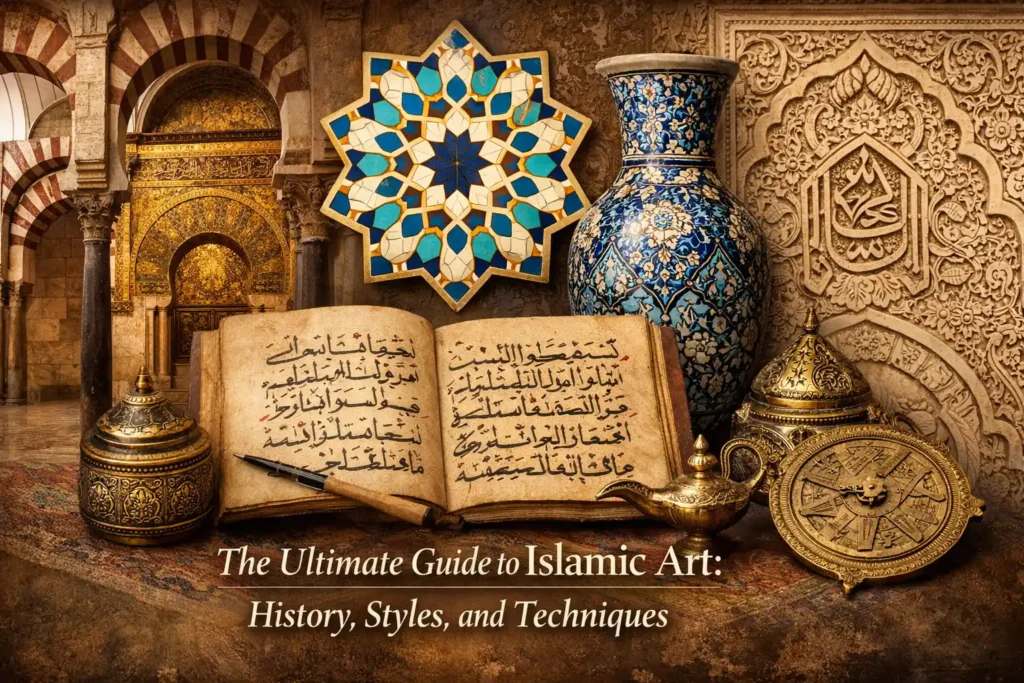
The global legacy of Islamic art spans over fourteen centuries, bridging diverse cultures, continents, and artistic traditions. Unlike many Western art movements centered around human figures, this sacred tradition focuses on the spiritual essence of geometry, nature, and the divine word.
Understanding the foundational history, regional styles, and intricate techniques of this art form offers deep insights into its cultural significance and helps you gracefully incorporate these timeless aesthetics into contemporary living spaces.
History of Islamic Art
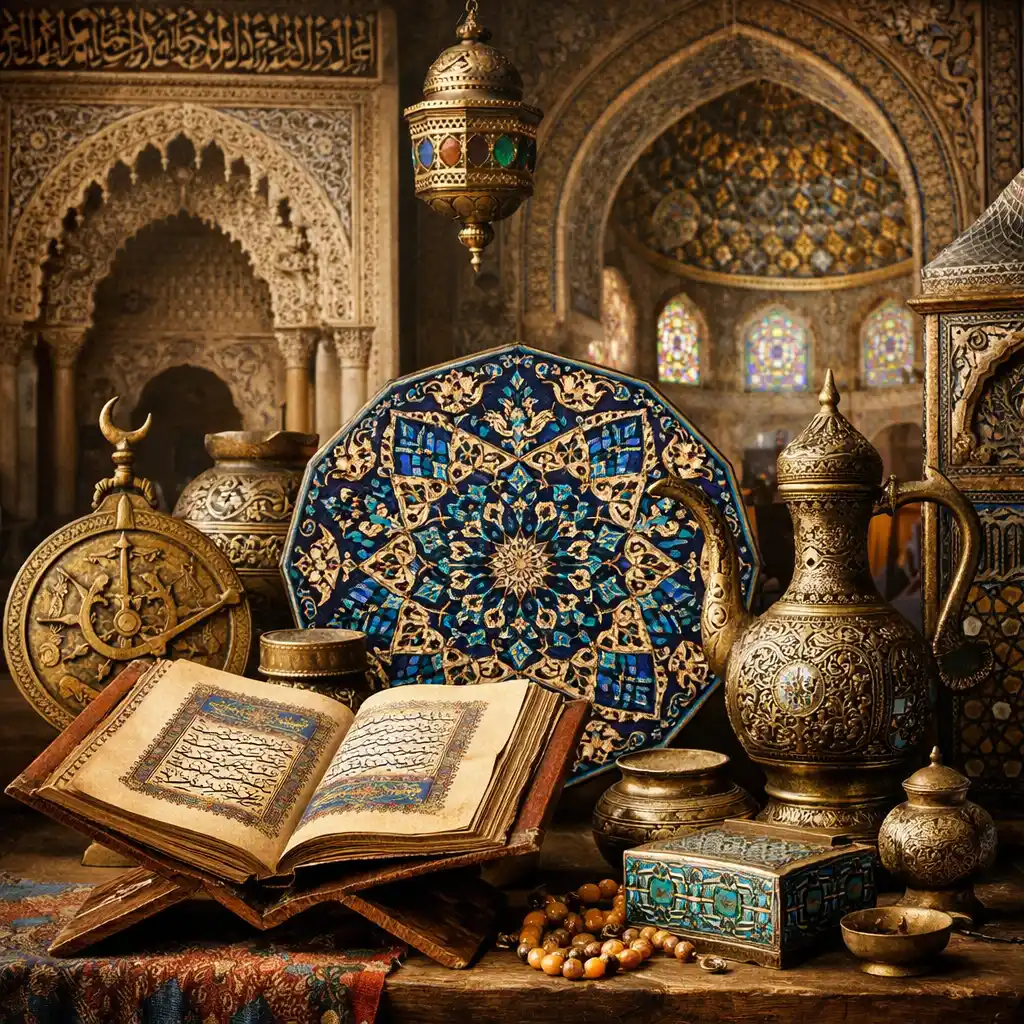
The history of this art form shows a beautiful journey of growth and change across different centuries. It did not appear out of nowhere. Instead, Muslim artisans carefully blended old regional traditions with new Islamic values to create a unique visual style that developed over several major empires.
The Umayyad and Abbasid Eras
The historical origins of Islamic art began to solidify during the Umayyad dynasty, heavily influenced by Byzantine and Sasanian traditions. Early masterworks combined classical Mediterranean elements with regional Eastern concepts to create monumental architecture.
As power shifted to the Abbasid Caliphate, artistic expression underwent a monumental evolution. According to historical records preserved by The Metropolitan Museum of Art (The Met), this golden era introduced revolutionary ceramic glazes, advanced lusterware techniques, and highly stylized vegetal forms that moved away from realism toward pure abstract representation.
The Ottoman Empire and Beyond
Throughout the centuries, notable Islamic empires developed highly distinct visual identities that defined specific historical periods. The Ottoman Empire introduced grand architectural mosques with cascading domes and refined Iznik ceramic tilework. Concurrently, the Safavid dynasty in Persia perfected intricate silk textiles and miniature paintings, while the Mughal Empire in South Asia blended Persian elements with local craftsmanship to produce wonders like the Taj Mahal.
Each period added unique cultural layers, ensuring the art form remained dynamic while maintaining its core spiritual identity.
Styles of Islamic Art
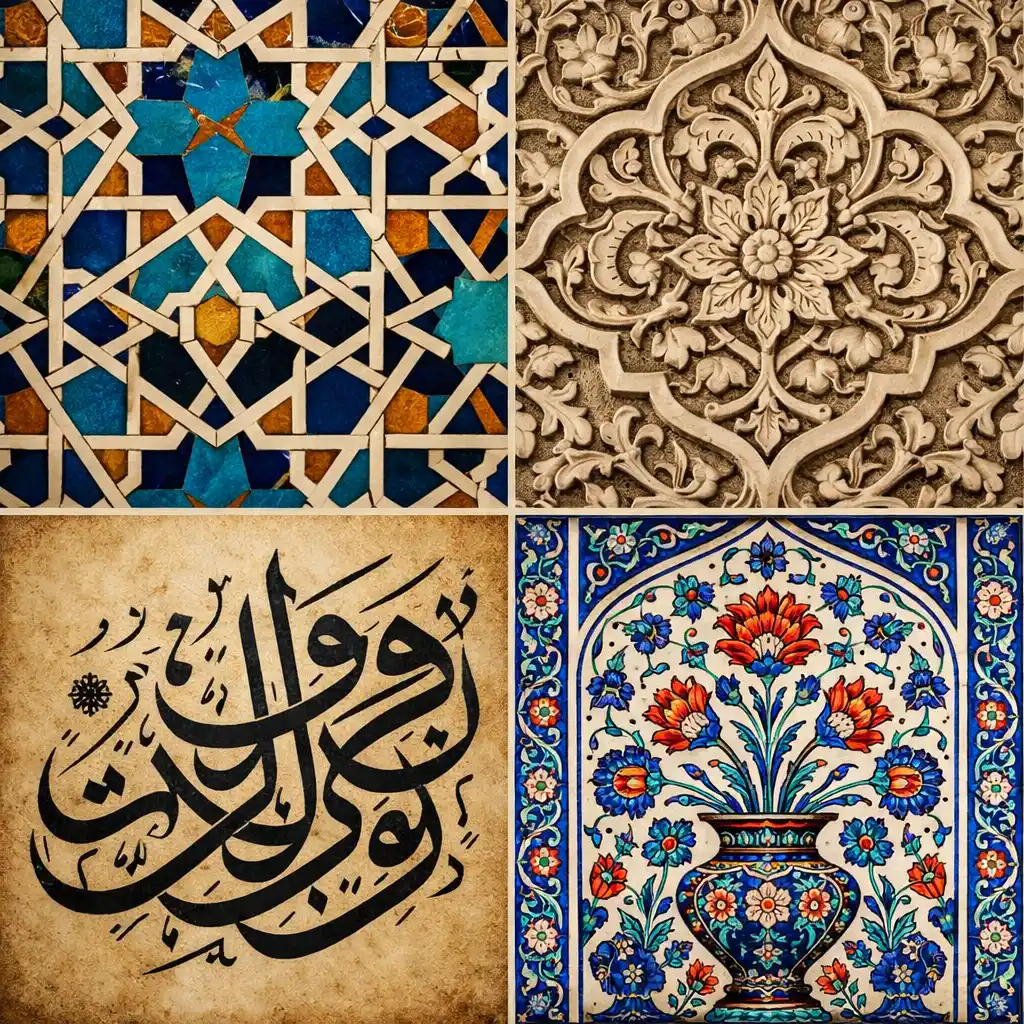
Islamic design uses specific visual elements that define its core identity. Artists combine mathematics, nature, and the written word to build these unique creative styles. Together, they create a balanced artistic system that is easily recognizable worldwide.
Geometric Patterns and Arabesques
The core of this visual language relies on complex mathematical grids and repetitive natural motifs. Geometric patterns utilize basic shapes like circles and squares to create infinitely repeating star designs, representing the infinite nature of creation.
Intertwined with these grids is the Arabesque, a distinct style of rhythmic, linear patterns featuring scrolling foliage, vines, and leaves. This technique beautifully emphasizes balance and continuous flow, ensuring that no single element dominates the visual field.
Calligraphy as an Art Form
Arabic calligraphy stands as the highest verbal and visual expression in this spiritual tradition, initially developed to preserve the sacred text of the Quran with absolute precision and reverence. Over time, scripts like the angular Kufic and the fluid Thuluth evolved into standalone aesthetic masterpieces.
Today, this rich heritage continues to thrive globally, transforming traditional ink manuscripts into breathtaking best islamic calligraphy wall art pieces that anchor modern living rooms with deep spiritual meaning.
Regional Art Variations
While sharing a cohesive spiritual core, the art form adapted fluidly to different geographical regions. In North Africa and Andalusia, Moorish design favored complex horseshoe arches and carved stucco work.
In contrast, South Asian variations embraced rich floral realism and marble inlays, while Middle Eastern styles heavily prioritized intricate woodwork and metallic lusterware. These regional shifts prove that traditional principles can harmonize with local cultural aesthetics seamlessly.
Techniques Used in Islamic Art
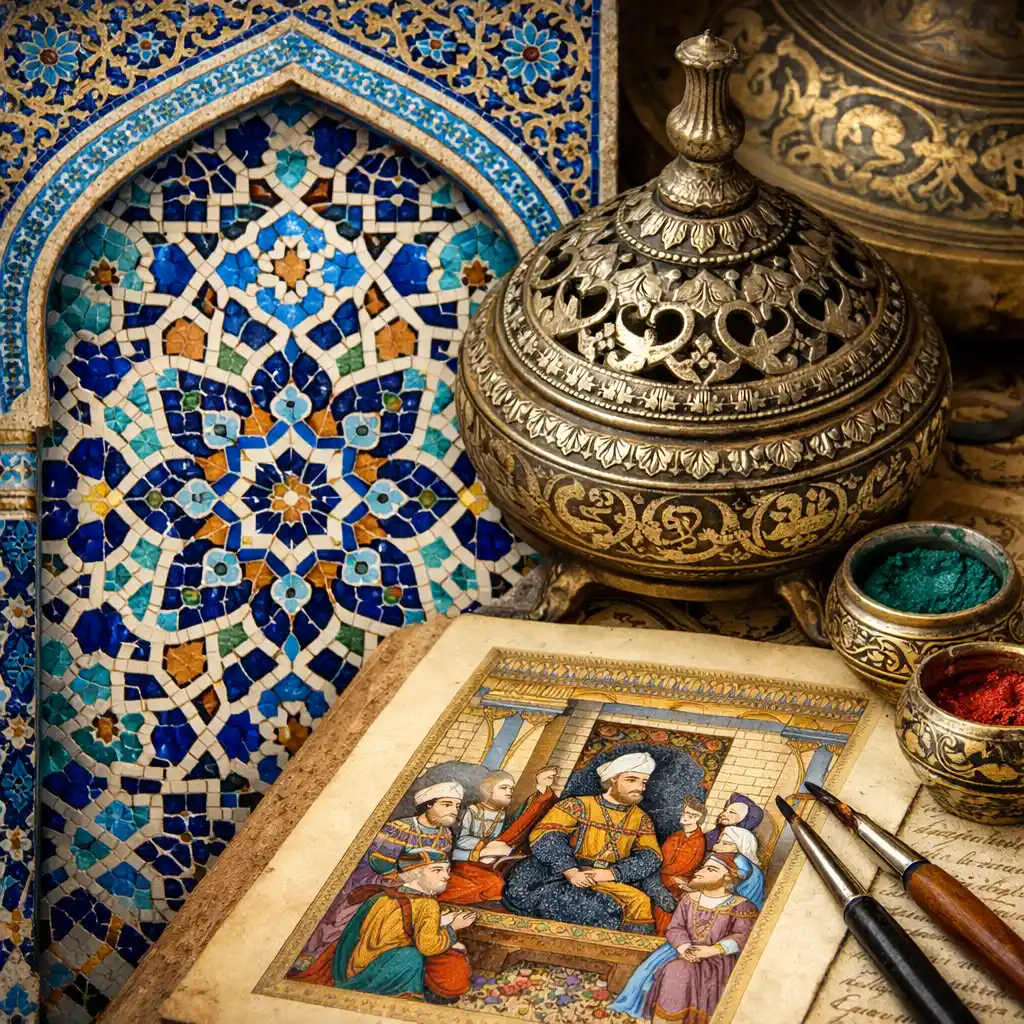
The creation of these masterpieces required unique craft skills and patient hands. Master artisans used advanced methods to shape raw materials like clay, metal, and organic pigments into highly detailed works. These physical methods allowed spiritual patterns to survive beautifully for generations.
Intricate Tilework and Mosaic
Architectural surfaces in historic mosques and palaces achieve their iconic, mesmerizing beauty through specialized master techniques. Artisans utilized complex geometric tile mosaic cutting, where individually glazed ceramic pieces were meticulously shaped and fitted together like a massive jigsaw puzzle.
Physical collections preserved at the Museum of Islamic Art (MIA) demonstrate how these complex arrangements create shifting optical depth, turning flat stone walls into radiant, continuous reflections of light and color.
Metalwork and Miniatures
Beyond architecture, specialized techniques flourished on a smaller scale through domestic and scholarly objects. Metalworkers perfected the art of inlaying brass and bronze vessels with delicate gold and silver wires to form intricate inscriptions.
Simultaneously, court painters crafted Persian and Mughal miniatures—highly detailed, small-scale illustrations inside manuscripts using vibrant pigments made from crushed minerals and real gold leaf, showcasing elite mastery over color composition and micro-craftsmanship.
Incorporating Islamic Art into Home Decor
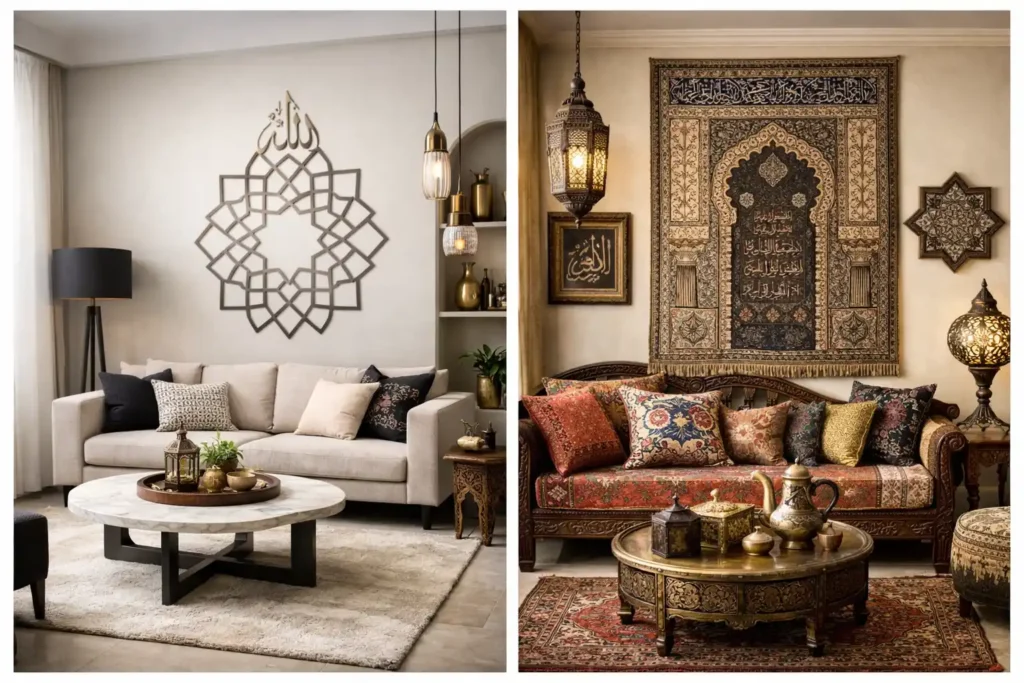
Bringing traditional visual styles into your living space is an excellent way to create a calm, elegant atmosphere. You do not need a museum layout to enjoy these pieces. Instead, small styling choices can help you blend geometric patterns and timeless calligraphy into your existing interior design.
Modern Home Decor Settings
Bringing traditional aesthetics into contemporary living spaces requires a thoughtful balance between old-world heritage and modern minimalism. You can easily integrate these classic styles by using geometric wall panels as single accent features or placing abstract canvas prints on neutral walls.
For a complete layout that honors structural flow and spiritual peace, studying professional islamic prayer room designs decor guides can show you how to arrange furniture cleanly around focal art points.
Selecting Sacred Textiles and Art
When dressing your home, select specific high-quality decor items such as woven textiles, subtle geometric carpets, and premium framed prints. To ensure a harmonious look, learn to choose the right islamic wall art for your living room based on your existing furniture scales, lighting angles, and color palettes.
Placing a single, well-crafted focal piece on a primary accent wall honors traditional aesthetics deeply while maintaining a sleek, uncluttered contemporary design flow.
Conclusion
The vast historical evolution of Islamic art proves that sacred geometry, refined calligraphy, and master craftsmanship transcend temporal and cultural boundaries. From ancient Umayyad architectural monuments to modern digital canvas adaptations, these styles continue to inspire peace, focus, and visual wonder. By understanding the deep history and technical mastery behind these patterns, you can select meaningful pieces that bring both cultural authenticity and timeless elegance to your contemporary home sanctuary.
Frequently Asked Questions
Islamic art is defined by its focus on spiritual essence rather than human figures. It relies heavily on complex geometry, natural leaf motifs, and sacred calligraphy to reflect the infinite nature of creation.
The four primary types of Islamic art are:
1. Calligraphy: Sacred hand-written Arabic script.
2. Geometric Patterns: Infinite mathematical grids and star designs.
3. Arabesque: Rhythmic, scrolling floral and plant motifs.
4. Figural Art: Non-religious illustrations used strictly in secular manuscripts and textiles.
Arabic calligraphy is widely considered the most important form of Islamic art. It holds the highest spiritual status because it was initially developed to preserve and honor the sacred text of the Quran with absolute precision.
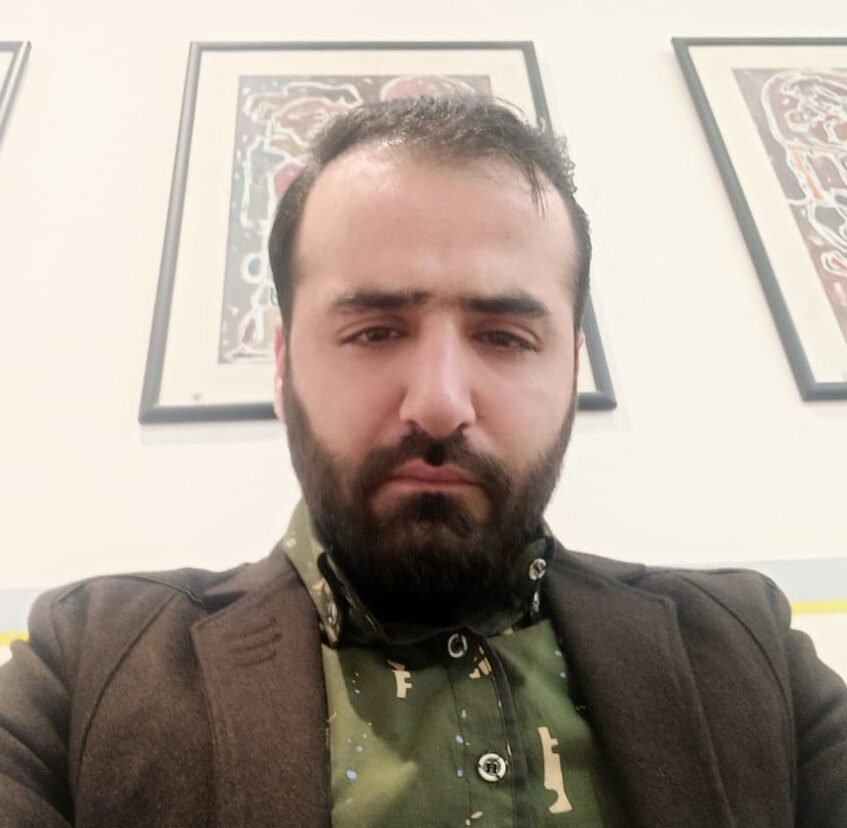
My name is Mehran AlMustafa. I write product reviews and recommendations focusing on tech products, modest fashion, gifts, and home decor that align with Islamic values. My work also focuses on Islamic lifestyle products and essential daily necessities for Muslim users.
My work draws on my academic background, practical experience in marketing, and systematic research based on product specifications, market demand, and actual user feedback.
I evaluate products based on quality, ease of use, practicality, and how well they meet users’ needs.