
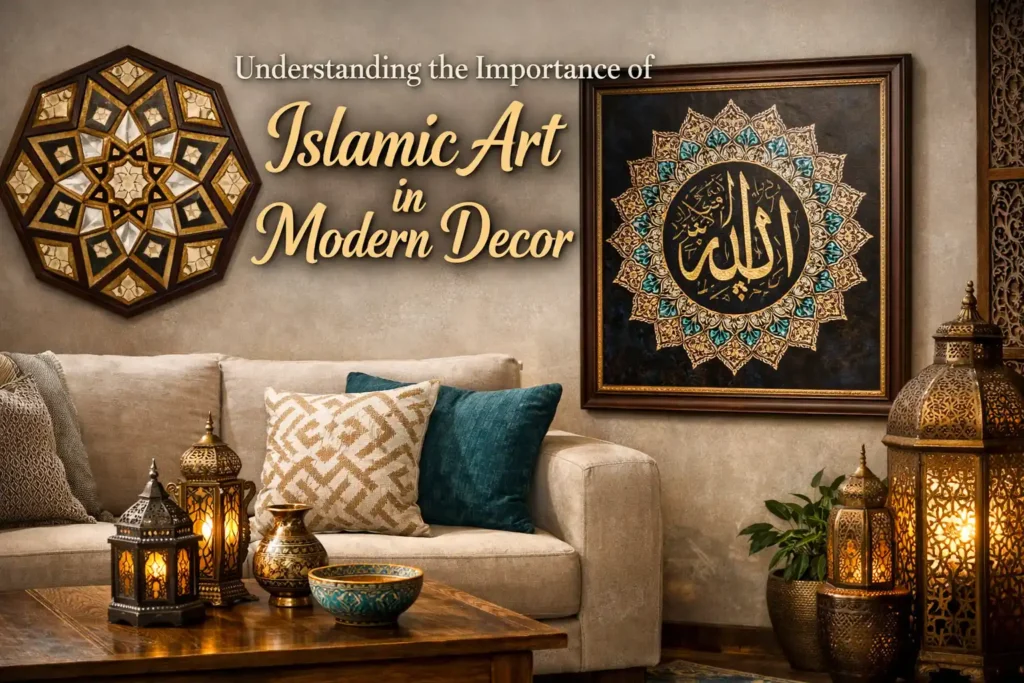
Modern residential interiors often favor neutral color palettes, clean lines, and minimalist furniture layouts. While this setup creates an organized environment, it can lack distinct character or personal identity. Integrating traditional elements solves this design issue. Understanding the importance of Islamic art helps you add depth, historical value, and complex geometric visual points to contemporary spaces without cluttering your home.
Historical Significance of Islamic Art
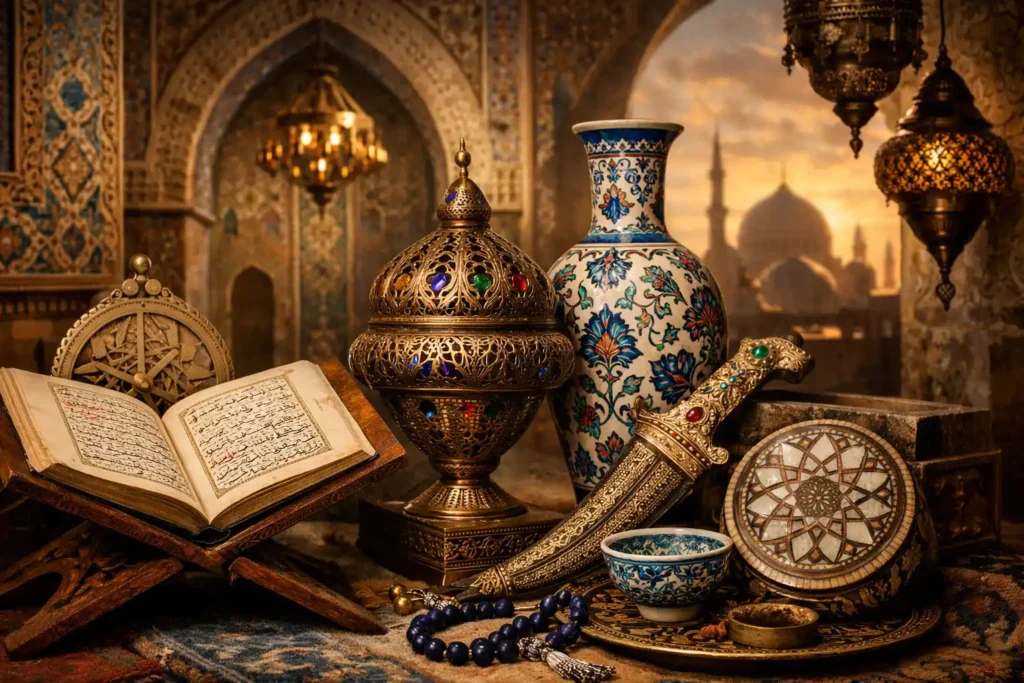
Islamic art developed over 14 centuries across a massive geographic territory stretching from Spain to India. It did not emerge from a single geographic hub. Instead, it grew as artists adapted local Roman, Byzantine, and Sasanian traditions to serve a new aesthetic purpose focused on balance, rhythm, and structural clarity.
Key Historical Periods and Contributions
Different ruling dynasties introduced specific structural developments and artistic styles to the medium:
- The Umayyad Caliphate (661–750 AD): This era established early architectural masterpieces. The construction of the Dome of the Rock in Jerusalem introduced extensive glass mosaics and intricate floral motifs into permanent building structures.
- The Abbasid Golden Age (750–1258 AD): Artists during this period advanced ceramic production. They developed lusterware, a technique that gives pottery a metallic, iridescent sheen, mimicking precious metals.
- The Ottoman Empire (1299–1922 AD): This period refined textile production, complex Iznik tilework, and official state calligraphy styles, focusing heavily on symmetrical floral arrangements like tulips and carnations.
Reflection of Cultural Diversity
Because Islamic civilization spanned multiple continents, the art style natively absorbed regional variations. For example, North African and Andalusian Moorish architecture heavily utilized carved stucco and stark geometric wood layouts. At the same time, Persian artistic traditions leaned toward detailed miniature paintings and rich, deep blue glazed tiles. This inherent diversity makes the art style highly versatile for modern design layouts, as it offers a broad palette of regional styles to choose from.
Styles and Techniques in Islamic Art
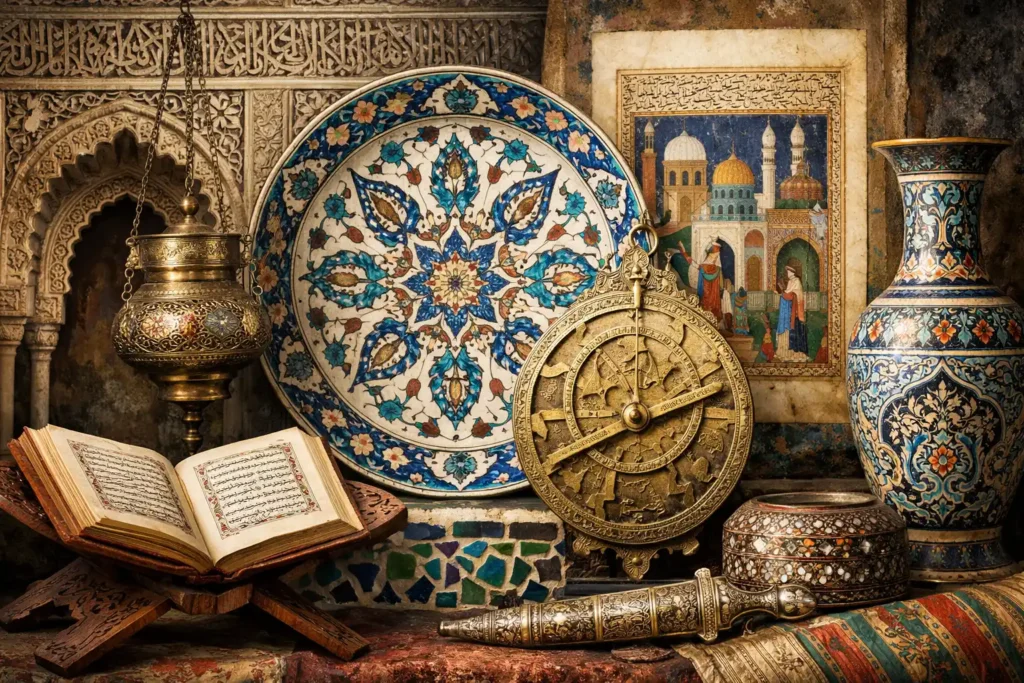
Islamic art relies on specific design rules that avoid the representation of human or animal figures in religious contexts. Artists developed highly complex abstract forms to create visual interest and movement.
Major Artistic Styles
Three primary categories define traditional Islamic design:
| Style | Description | Modern Decor Application |
| Arabic Calligraphy | Stylized script representing textual passages, frequently using Thuluth or Kufic scripts. | Framed canvas prints, metal wall cutouts, or engraved glass panels. |
| Geometric Patterns | Interlocking star patterns, polygons, and repeating grids that extend infinitely. | Laser-cut room dividers, accent wallpapers, and floor tiles. |
| Arabesques | Rhythmic, winding rhythmic patterns featuring stylized plant stems, leaves, and scrolls. | Embroidered throw pillows, area rugs, and embossed metallic trays. |
Common Production Techniques
Traditional craftsmen used exact material sciences to create their works. Wood carving utilized inlaying methods where artisans placed mother-of-pearl, bone, or contrasting wood species into pre-cut grooves. Metalworkers practiced repoussé and chasing to create raised or recessed patterns on brass and copper vessels. Tilemakers used the zellige technique, hand-cutting individual glazed terracotta tiles into precise geometric shapes to assemble massive interlocking mosaic murals.
For an authentic look, you can view original examples at the Metropolitan Museum of Art Islamic collection to see how these techniques look on physical materials.
Incorporating Islamic Art into Modern Decor
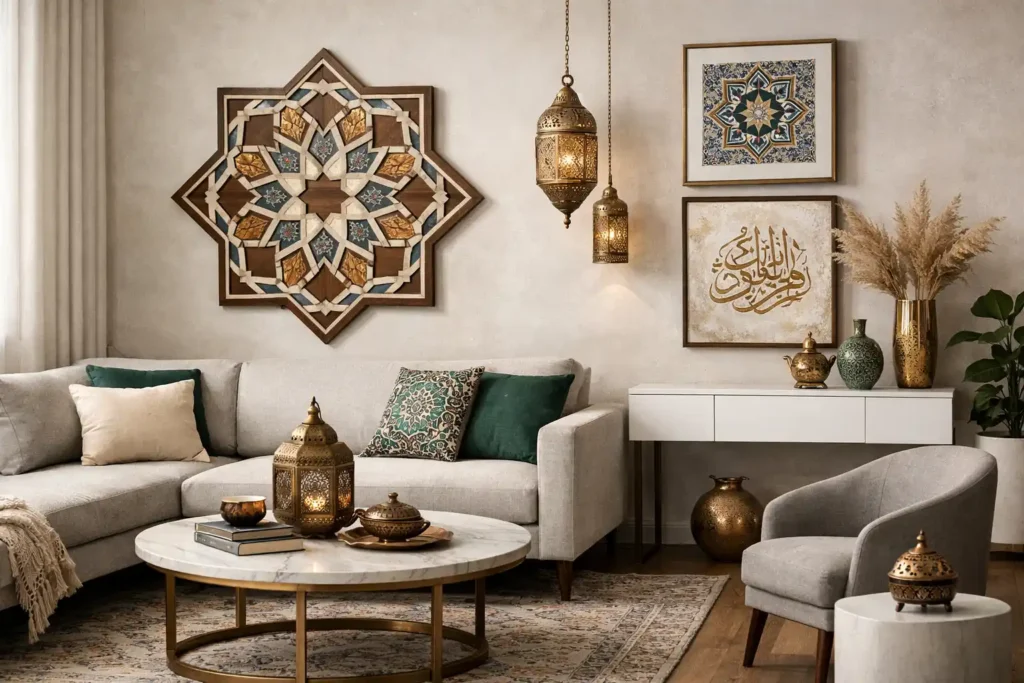
Integrating these historical pieces into a minimalist or contemporary home requires careful placement. You want to avoid overcrowding your rooms so each piece retains its visual power.
Seamless Integration Practices
To combine old and new styles smoothly, treat your traditional pieces as singular focal points. If you have a clean, white contemporary living room, you can hang a single large canvas featuring bold Kufic calligraphy. The contrast between the minimalist background and the complex text creates immediate visual balance.
You can also use functional objects. Instead of a standard glass coffee table, use a hand-carved wooden table featuring geometric lattice work (Mashrabiya) to cast interesting shadows across your floor. If you want to expand on these design ideas, read our detailed guide on styling modern living rooms.
Choosing the Right Pieces
Select items that share a common element with your existing color palette or material selection. If your room features brass lighting fixtures, look for polished brass or copper Islamic metalwork to match. If your furniture relies on cool grey fabrics, look for geometric prints or textiles that incorporate blue tones or monochrome black-and-white patterns to maintain a cohesive environment.
Strategic Display and Placement
- Entryways: Hang an intricate mirror frame with Arabesque carvings directly above a simple console table to set an elegant tone right at your front door.
- Lighting Elements: Install a pierced metal pendant lamp in a corner or dining space. When turned on, the laser-cut geometric patterns project distinct light designs across the walls.
- Dining Spaces: Use geometric ceramic coaster sets or a large calligraphic silver platter as a centerpiece on your dining table.
The Importance of Islamic Art Today
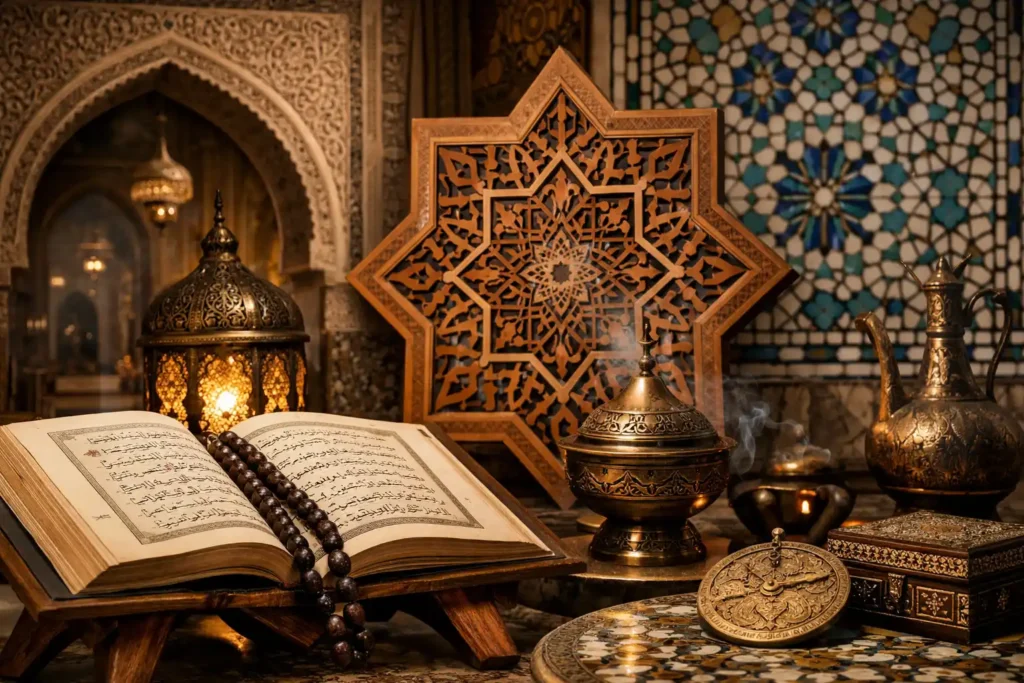
In contemporary society, Islamic art serves a purpose beyond basic home decoration. It functions as a tangible link to historical craftsmanship in a world filled with mass-produced plastic goods.
Cultural Understanding and Relevance
Displaying these artworks provides an educational element inside the home. It highlights the shared cross-cultural histories of mathematics, geometry, and design. The structural precision of an interlocking eight-fold star pattern demonstrates a historical mastery of geometry that remains highly relevant to modern architectural forms.
Spiritual Practices and Spaces
For many homeowners, the importance of Islamic art lies in its ability to create an intentional space for quiet reflection. Placing clean, elegant calligraphic renderings of specific verses in a dedicated prayer corner or a quiet study helps establish a serene atmosphere. The infinite repetition found in geometric tilework or Arabesque lines subtly draws the eye inward, encouraging mindfulness and personal calm within a hectic daily routine.
Conclusion
Using Islamic art in your modern interior design does not require you to convert your home into a museum. By selecting specific geometric prints, textured textiles, or calligraphic wall art, you introduce historical depth and tactile contrast to clean contemporary lines. Start by selecting one high-quality piece that matches your current room palette, and build your layout around it to create a balanced, personalized living space.
If you found this article helpful, check out our other detailed reviews and recommendations to upgrade your home and daily routines:
- Best Quran stands
- Best Zikr Ring Jood Flex Lite
- Best Azan clock for home
- Best Muslim prayer mats
- Best Islamic calligraphy wall art

My name is Mehran AlMustafa. I write product reviews and recommendations focusing on tech products, modest fashion, gifts, and home decor that align with Islamic values. My work also focuses on Islamic lifestyle products and essential daily necessities for Muslim users.
My work draws on my academic background, practical experience in marketing, and systematic research based on product specifications, market demand, and actual user feedback.
I evaluate products based on quality, ease of use, practicality, and how well they meet users’ needs.