
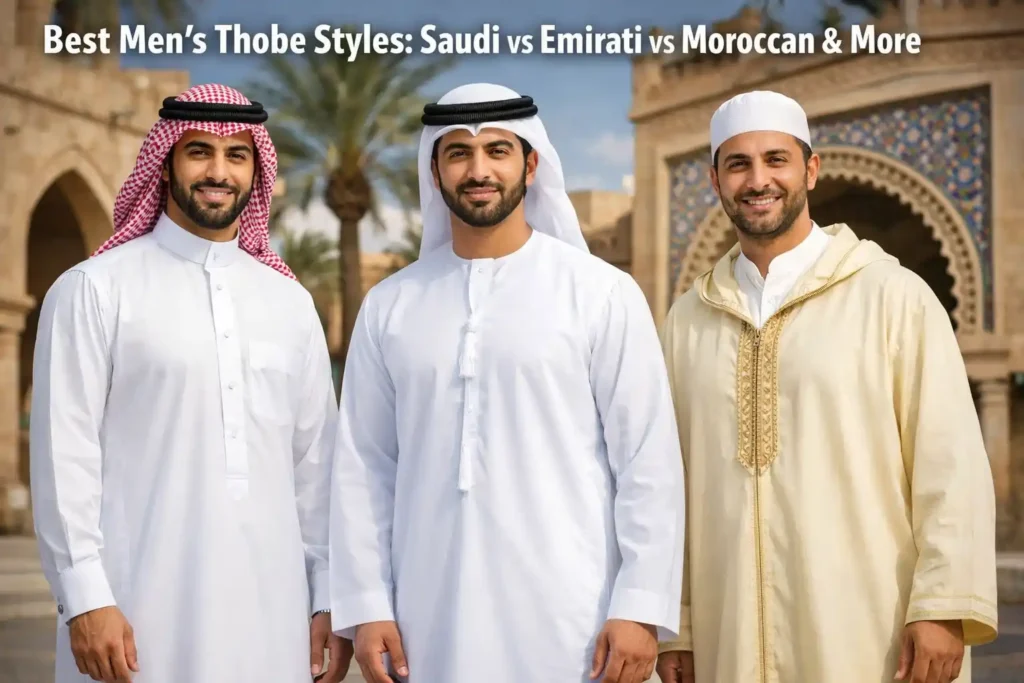
Best men’s thobe styles online shopping requires knowing your options. Finding the right thobe for men can feel overwhelming due to regional variations. Different countries create unique looks and traditional cuts. This guide breaks down popular options to help you choose. You will discover how each cut looks, feels, and compares. We also highlight reputable brands leading the market. Let us find your fit.
Top Global Men’s Thobe Styles Explained
Here is an overview of the most popular men’s thobe styles:
1. Saudi Men’s Thobe Style
The Saudi design stands out as a formal, tailored option among the best men’s thobe styles. While it often features a structured, rigid collar with two buttons, modern brands offer diverse styles. You can easily find collarless round-neck options with clean, hidden stitch details, or casual open necks with vertical buttons down the chest. Some formal Saudi styles include cufflink sleeves, while daily versions use standard buttons. It offers a clean fit that sits neatly on your upper body.
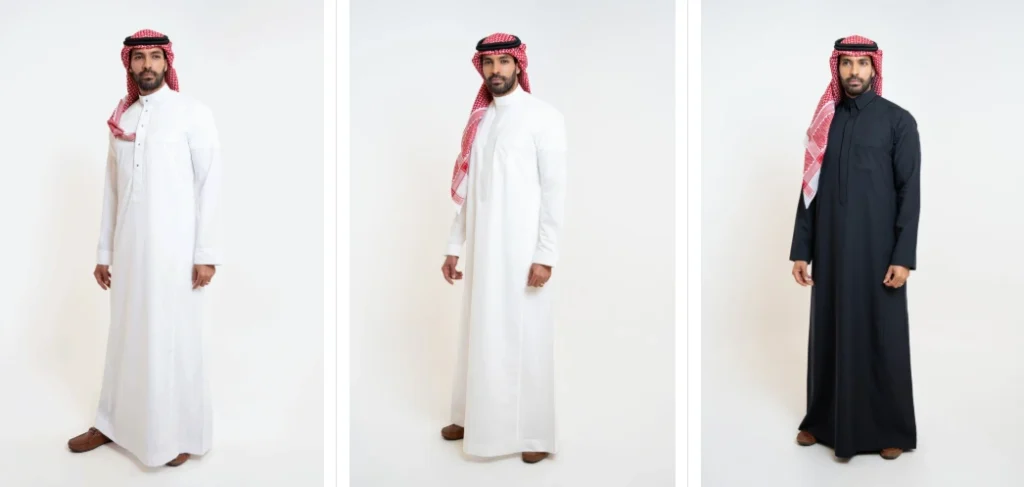
Manufacturers use medium-weight cotton or polyester blends to hold this crisp shape. This style is a common choice for office wear and business settings.
Top reputable Saudi brands include Al Haramain, Daffah, Ikaf, and Al Shiaka. They are famous for durable, ready-to-wear sizing.
2. Emirati Men’s Thobe Style
The Emirati cut, also known locally as the kandura, prioritizes clean fluidity. It is completely collarless with a round neckline. Its most famous feature is a long, matching decorative tassel hanging on the chest. The sleeves are open and buttonless.
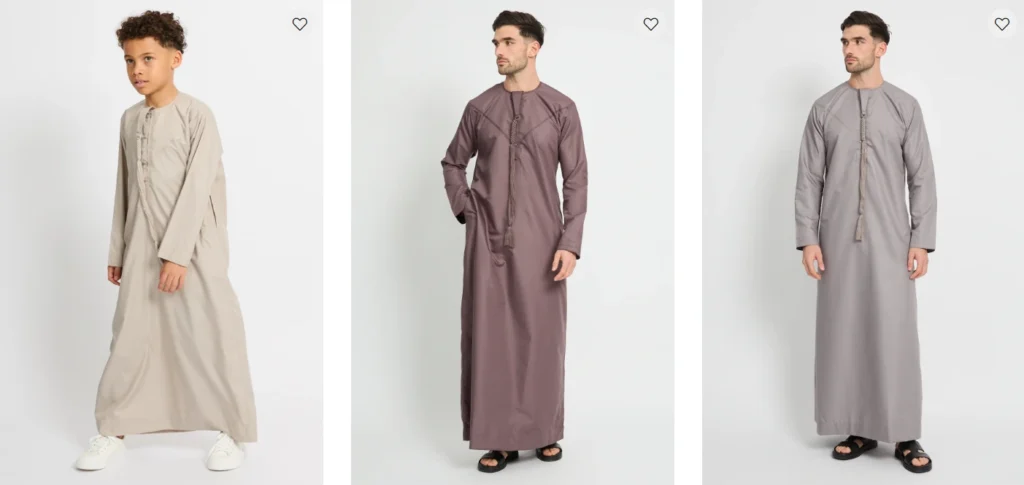
Tailors rely on lightweight synthetic fabrics to help with airflow. Emirati men wear it daily during hot weather.
Top leading brands in the UAE include Bait Al Kandura and Al Ameer. They dominate the market with sleek, minimalist designs.
3. Omani Men’s Jubba Style
The Omani garment balances minimalism with distinct regional heritage. Like the Emirati style, it is completely collarless with a clean round neck. However, it features a very short, delicate tassel attached to the side of the chest. The collar area boasts colorful, detailed embroidery patterns.
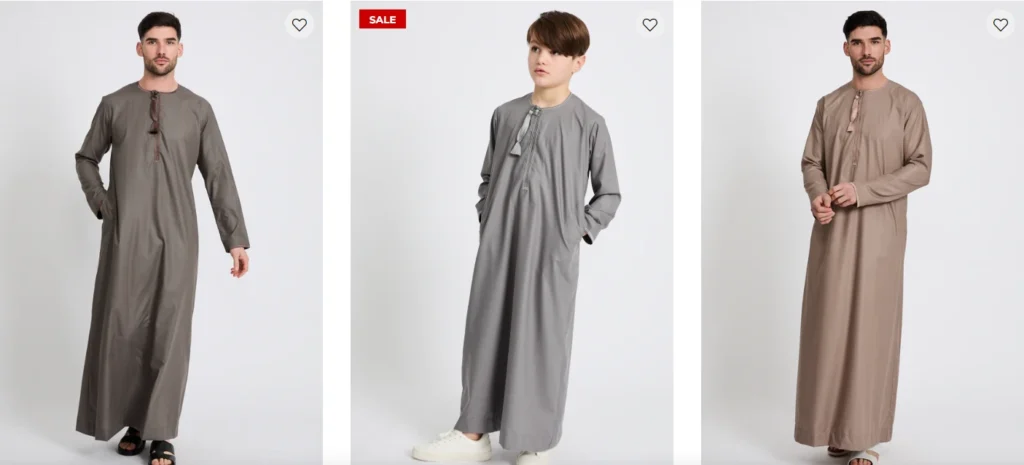
Artisans use natural, breathable cotton fabrics for everyday utility. It is famous for showcasing subtle regional colors rather than just plain white. This cut is highly regarded for its proud connection to traditional heritage.
Famous local labels include Al Obaidani, which offers authentic Omani tailoring standards.
4. Moroccan Men’s Thobe Style
The Moroccan variant, often found as a short sleeve thobe or gandoura, is known for relaxed comfort and airflow. Unlike the heavy hooded djellaba, these popular warm-weather styles feature an open, collarless round neck. Their defining feature is the colorful, intricate Sfeefa embroidery stitching running down the front chest placket and along the sleeve edges. The cut offers a loose, airy drape with half sleeves, making it a highly practical alternative to full robes.
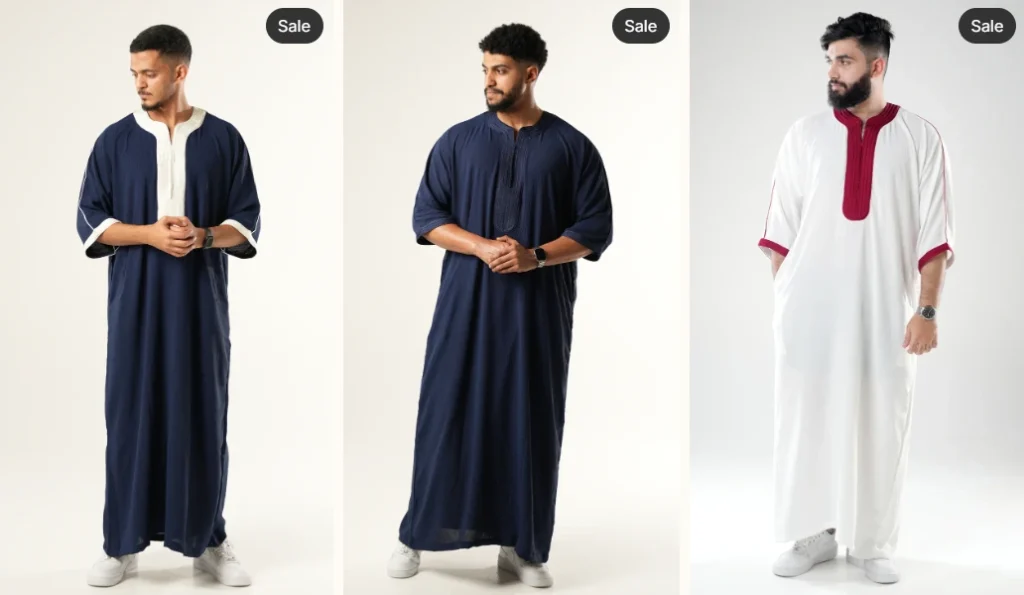
Manufacturers use breathable woven cotton and lightweight fabrics for summer wear. This versatile style is a great choice for festive family gatherings, Friday prayers, or lounging at home on premium muslim prayer mats.
Top specialized makers include Diamantine, which brings authentic Moroccan heritage to western shoppers looking for unique best men’s thobe styles.
5. African Men’s Jubba Style “boubou”
The African style, widely known as the boubou, brings vibrant energy to traditional wear. It features a loose, oversized cut with wide sleeves. The entire chest area is decorated with detailed gold or colorful geometric stitching.
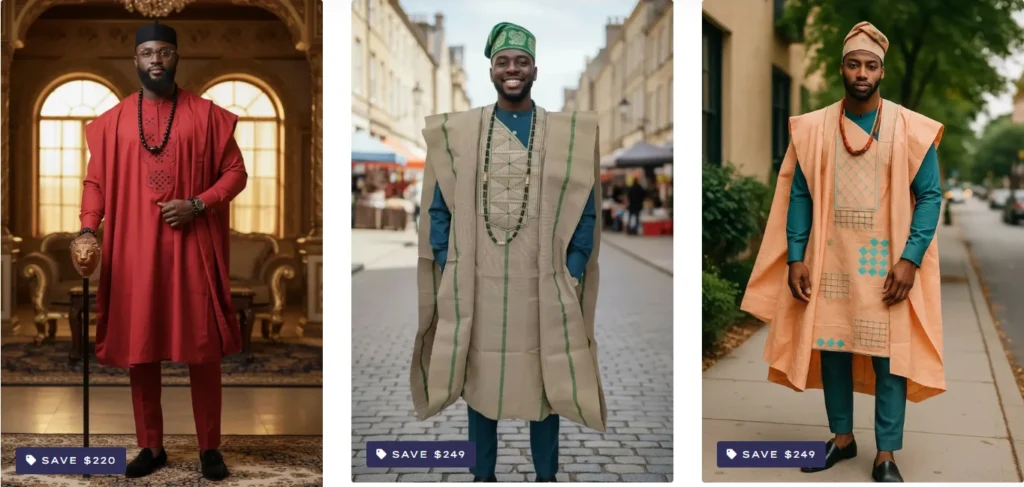
Tailors use high-quality polished cotton that retains an impressive, expansive shape. It is a popular choice for weddings and major community events. It makes one of the best unique islamic gifts for celebrations.
Elite designers like L’Artisan Boubou lead the West African market with these traditional pieces.
6. Afghan and Pakistani Men’s Thobe Style
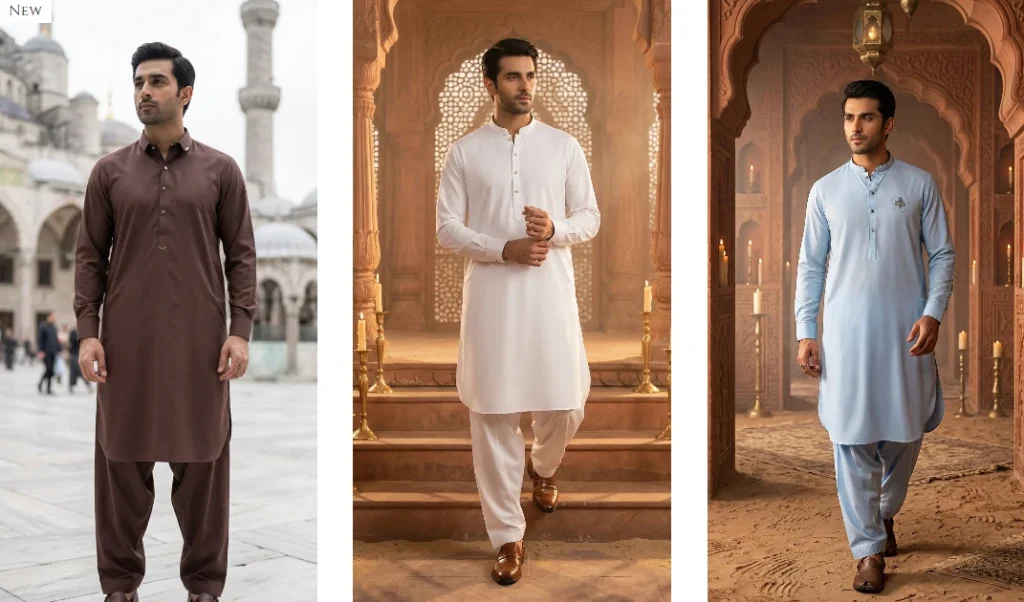
The shalwar kameez serves as the official national and formal dress across both Pakistan and Afghanistan. While not a traditional single-piece robe, this iconic two-piece outfit represents one of the most practical alternative best men’s thobe styles available in the wider Islamic world. It pairs a long, knee-length tunic shirt (kameez) with loose, baggy matching pants (shalwar). The shirt features a soft collar and a casual buttoned placket, making it suitable for both high-profile formal events and daily office wear.
Makers rely on lightweight, durable woven cotton or blended fabrics. It is famous for its rugged utility and practical everyday wear. Men choose this cut because it allows completely unrestricted movement when walking, working, or sitting to read on the quran stands.
Top industry giants include Junaid Jamshed (J.) and Almirah, offering reliable fabric choices.
Smart Buying Guide: Fabrics and Price Ranges
Understanding fabric weights and price tiers saves you from bad online purchases. Traditional clothing costs vary based on fiber quality, embroidery details, and brand reputation.
- Premium Luxury ($$$ -$$ $$): Brands like Bait Al Kandura or Al Ameer. They use high-grade synthetic fabrics, custom embroidery, and clean stitching. Chosen often for weddings and special Eid celebrations.
- Moderate Quality ($$): Brands like Al Haramain and Daffah. They utilize reliable, durable cotton-polyester blends. Excellent for regular mosque wear and daily use.
- Budget Friendly ($): Unbranded casual imports. They feature lightweight polyester or basic linen mixes. Best suited for simple loungewear or warm summer days.
Ultimate Comparison of Regional Men’s Thobes
| Style Cut | Collar Design | Key Feature | Best Material | Best Occasion |
|---|---|---|---|---|
| Saudi | Rigid Standing Collar | Available Cufflink Sleeves | Crisp Polyester Blend | Formal / Business |
| Emirati | Collarless Round Neck | Long Floating Tassel | Flowing Lightweight Synthetic | Daily Wear / Heat |
| Omani | Collarless Round Neck | Short Side Tassel + Color | Breathable Cotton | Cultural Events |
| Moroccan | Attached Loose Hood | Handcrafted Stitching | Breathable Linen / Wool | Casual Lounging |
| African | Wide Open Neck | Detailed Gold Embroidery | Polished Cotton | Weddings / Festivals |
| Pakistani | Soft Shirt Collar | Two-Piece Pants Set | Durable Woven Cotton | Everyday Utility |
Conclusion: Finding Your Perfect Fit
Choosing your ideal thobe for men depends entirely on your personal style goals. If you love a sharp, tailored look for formal events, a Saudi Al Haramain cut is a solid option. For hot summer days where staying cool is your priority, the loose Emirati or Omani cuts are practical. If you want comfort at home, try a Moroccan hooded piece or a Pakistani two-piece outfit. Finding the best men’s thobe styles means matching the cut to your lifestyle needs.
Frequently Asked Questions
The main styles vary by region. The Saudi thobe features a structured collar and tailored fit. The Emirati cut is collarless with a long decorative tassel. Moroccan styles often include a comfortable hood, while Omani versions showcase colorful embroidery on the chest.
Muslims call it by different names depending on their region and dialect. Saudi Arabia and western countries commonly use the term thobe (or thawb). People in the UAE know it as a kandura, while the word dishdasha is popular in Kuwait, Oman, and Iraq. Additionally, North African and South Asian communities widely use the term jubba.
A thobe for men is a traditional, loose-fitting ankle-length robe with long sleeves. It is the standard daily clothing for men across the Arabian Peninsula and many parts of the Muslim world. Designed for modesty and heat relief, it combines deep cultural heritage with clean comfort.
Arab men wear several traditional garments depending on the region. The most common is the thobe (or kandura), a long ankle-length robe. They also wear the bisht, a formal flowing cloak over the thobe for special events. For headwear, they use the ghutra (headscarf) held in place by the agal (black cord).
My name is Mehran AlMustafa. I write product reviews and recommendations focusing on tech products, modest fashion, gifts, and home decor that align with Islamic values. My work also focuses on Islamic lifestyle products and essential daily necessities for Muslim users.
My work draws on my academic background, practical experience in marketing, and systematic research based on product specifications, market demand, and actual user feedback.
I evaluate products based on quality, ease of use, practicality, and how well they meet users’ needs.