
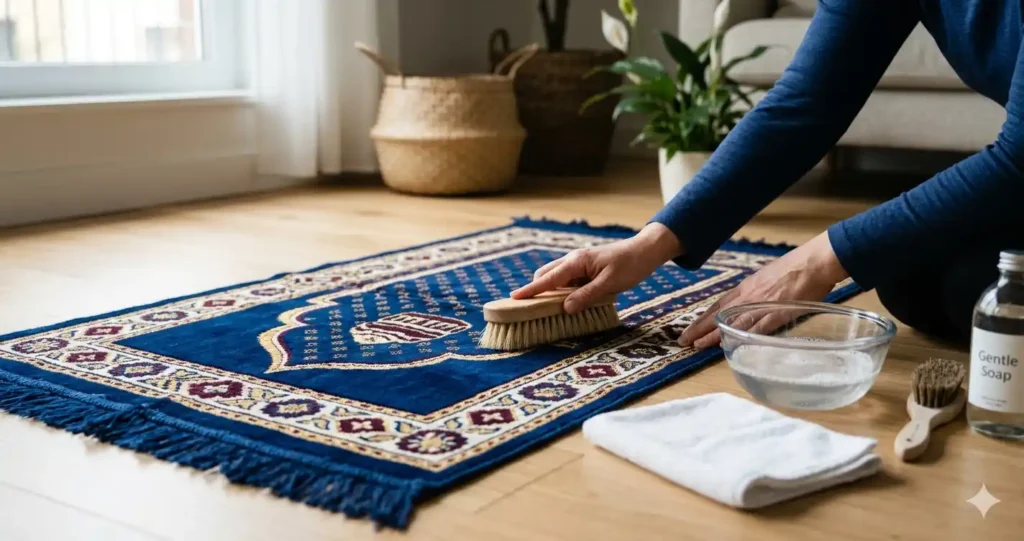
Keeping clean prayer mats is essential for maintaining Taharah (purity) and spiritual focus. Whether you own a luxury rug or a simple cotton one, proper care ensures a fresh environment for Salah. In this guide, I will share the most effective ways to maintain your rugs based on their specific fabrics and materials.
Daily Best Practices for Keeping Prayer mats Clean
The best way to maintain clean prayer mats is through daily habits. After each prayer, hold your rug by the edges and give it a light shake outdoors. This prevents dust and debris from settling into the Polyester fibers.
Tip: Never fold your mat, as creases can damage the internal threads over time. Instead, always roll it loosely from the bottom to preserve the fabric and embroidery, especially for Padded Prayer Mats.
How to Care for Different Types & Fibers of Prayer Rugs
The different types of fabric used to make prayer rugs require special care to maintain their texture and durability. Here’s how to care for each type:
- Velvet & Plush Fabrics: Found in most luxury Padded Prayer Mats, these need a soft brush to lift the pile. Use a lint roller for daily dust instead of heavy scrubbing.
- Synthetic Polyester: Common in Kids Prayer Mats, this fabric is tough and stain-resistant. Consequently, it is the only type I recommend for a gentle machine wash.
- Silk & Wool Blends: These are delicate and expensive. Never use hot water. I suggest hand washing with a wool-safe soap to protect the intricate designs.
- Microfiber: Used in Travel Prayer Mats, this is a “quick-dry” material. You can easily wash it in a sink with warm water and soap.
- Natural Cotton: While breathable, it is prone to shrinking. Always wash cotton rugs in cold water to avoid losing their original size and shape.
Can you put prayer mat in washing machine?

Not all prayer mats are machine-washable; it depends on the type of fabric, as each type has its own specific cleaning method. Here’s what you need to know:
- Padded & Velvet Mats: require spot cleaning only. Use a damp cloth and press gently. Never submerge the foam in water, as it will lose its orthopedic shape.
- Interactive Mats: Water is the enemy of an Interactive Prayer Mat. Wipe the surface with a lightly damp microfiber cloth and keep the Sensors and battery compartment completely dry.
- Cotton & Polyester mats: These are generally machine-washable. Use cold water and a gentle cycle with mild Detergent. Always air-dry them flat.
How to Remove Stains & Odors from a Prayer Mat
If an accident happens—such as a liquid spill or if your cat urinates on your prayer mat—act immediately to save the fabric:
- Blot, Don’t Rub: Use a dry towel to absorb liquid. Rubbing pushes the stain deeper into the fibers.
- Neutralize: Sprinkle bicarbonate of soda over the area to absorb odors.
- Rinse: Use a damp cloth with cool water to dab the spot, then air-dry completely.
Tips for Proper Prayer Mat Storage & Long-Term Care
Avoid storing your prayer mat in plastic bags, as they trap moisture and cause Mold or Mildew. Moreover, always store your mats in a clean, breathable cloth bag in a shaded area. This protects the colors from fading due to harsh sunlight exposure.
Conclusion
Cleaning your prayer mat is an act of kindness; taking care of it regularly ensures that your place of worship remains a haven of comfort and peace.
Frequently Asked Questions
Use a vacuum with a soft brush for dust, or spot-clean stains using baby shampoo or mild soap with a damp cloth. Consequently, you maintain the fabric’s quality without causing damage.
Yes, prayer mats require regular cleaning to ensure Taharah (purity) and remove oils or dust accumulated from daily use.
You should perform a light cleaning weekly and a deep wash every 3 to 6 months, or immediately if a spill occurs.

My name is Mehran AlMustafa. I write product reviews and recommendations focusing on tech products, modest fashion, gifts, and home decor that align with Islamic values. My work also focuses on Islamic lifestyle products and essential daily necessities for Muslim users.
My work draws on my academic background, practical experience in marketing, and systematic research based on product specifications, market demand, and actual user feedback.
I evaluate products based on quality, ease of use, practicality, and how well they meet users’ needs.